
Water Softener Installation & Repair in Pompano Beach, FL
For the moderately hard water common across South Florida, installed and serviced to actually keep working.
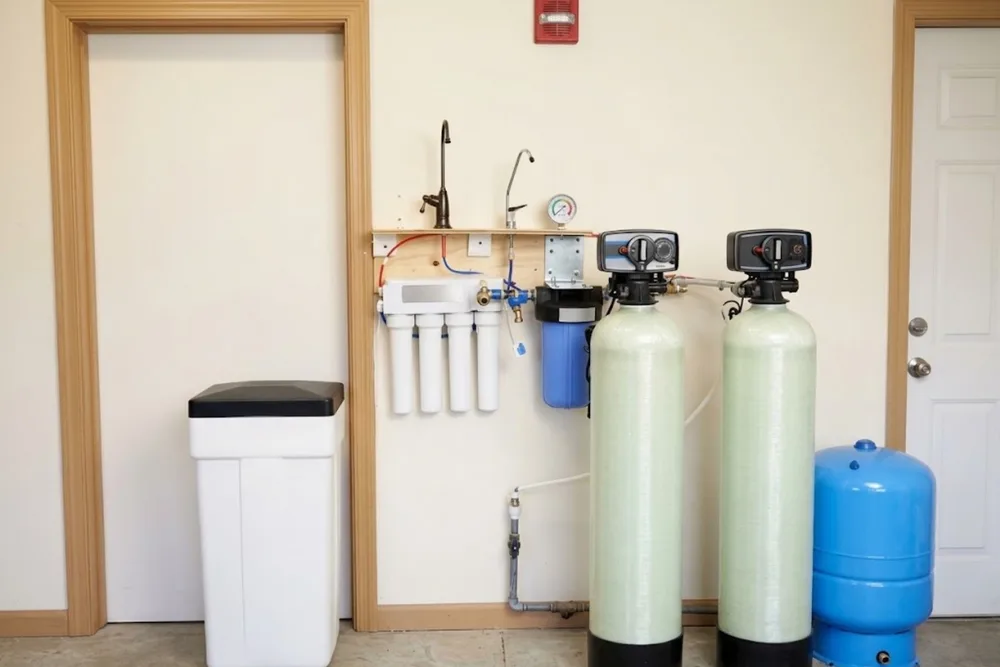
Why hard water is a real, if moderate, issue here
South Florida's water isn't as hard as parts of the Midwest or Southwest, but it's hard enough to cause real, cumulative effects: scale buildup inside tankless water heaters, reduced efficiency in tank water heaters, spotting on fixtures and glassware, and soap that doesn't lather as easily. None of these are dramatic on their own, but they add up in appliance lifespan and energy use over years.
Common softener problems and what causes them
A softener that stops regenerating properly is often a control valve or timer issue rather than a problem with the resin itself. Salt bridging, where salt forms a hard crust in the brine tank instead of dissolving properly, is a common cause of a softener that seems to be running but isn't actually softening the water. We check both before assuming the unit needs full replacement.
A unit that's simply reached the end of its resin life, typically 10 to 15 years for a well-maintained system, is a different conversation than a repairable control issue, and we'll be direct about which situation a specific unit is in.
Salt-based versus salt-free systems
A traditional salt-based softener actually removes hardness minerals through ion exchange and is the more effective option for households seeing real scale buildup. Salt-free conditioners alter mineral structure rather than removing it, which reduces scale formation without technically softening the water, a meaningful difference for anyone comparing the two based on marketing alone rather than how each one actually works.
For a household on a septic system, salt-based softener discharge is a consideration worth discussing, since regular brine discharge can affect septic system bacteria over time in ways a salt-free system avoids entirely.
Sizing a softener to the household
A softener sized too small for the household regenerates too often and wastes salt and water. One sized too large regenerates too infrequently and lets hardness through between cycles. Sizing depends on household size, water usage, and the actual hardness level of the incoming water, which is why we test the water rather than defaulting to a standard unit regardless of the property.
What Actually Affects Cost
- Salt-based vs salt-free system
- Household size and water hardness level
- New installation vs repairing an existing control valve
- Septic system compatibility considerations
Most homeowner insurance policies cover a sudden, accidental plumbing failure, a burst pipe, for example, but not gradual wear or a line that failed from ordinary age-related corrosion. That's the honest baseline to plan around rather than assume coverage applies.
Want your real number for this job? Call (954) 697-4920.
Related Services in Pompano Beach
A tankless water heater already showing scale buildup is a strong sign a water softener would extend the time between descaling services, covered under tankless water heater service. The same hard water affects a standard tank unit too, covered under water heater installation & replacement. A softener that's failed outright and is leaking at its own connections is a general plumbing repair in the meantime. For a household noticing spotting or scale for the first time, that's often the point to consider a softener rather than treating it as unavoidable.
Water Softener Installation & Repair Questions
Is South Florida's water hard enough to need a softener?
It's moderate rather than severe, but hard enough that most households notice a real difference in scale buildup and appliance lifespan with a softener installed.
Why does my softener use salt but the water still feels hard?
Salt bridging, where salt crusts instead of dissolving, is a common cause. It can look like the unit is working normally while it isn't actually regenerating the resin properly.
How long does a water softener actually last?
The resin typically lasts 10 to 15 years with normal maintenance, though the control valve and other components can need repair before then.
Will a water softener make my drinking water taste different?
Some people notice a slight taste difference from the added sodium, though it's minimal. A separate reverse osmosis system under the sink is an option for anyone who prefers to avoid it in drinking water specifically.
How much salt does a typical softener use per month?
It varies by household size and water hardness, but checking the brine tank monthly and refilling as needed is the standard maintenance routine we can walk through during installation.
Does a water softener need professional installation, or can it be a DIY project?
Professional installation ensures correct bypass valve setup and connection to the main line without introducing a leak point, which is worth the cost given how central that connection is to the whole home's water supply.
How long does softener installation take?
A standard installation with an accessible main water line typically takes a few hours in a single visit.
Can a water softener be paired with a whole-home filtration system?
Yes, softening and filtration address different things, hardness minerals versus taste, odor, or sediment, and the two systems commonly work together rather than one replacing the need for the other.
Will installing a softener affect my water pressure?
No, a properly sized softener has minimal effect on household water pressure or flow rate.