
Repiping & Whole-Home Pipe Replacement in Pompano Beach, FL
For the cast-iron and galvanized supply lines common in Pompano Beach's mid-century homes, replaced with PEX or copper before a slab leak forces the issue.
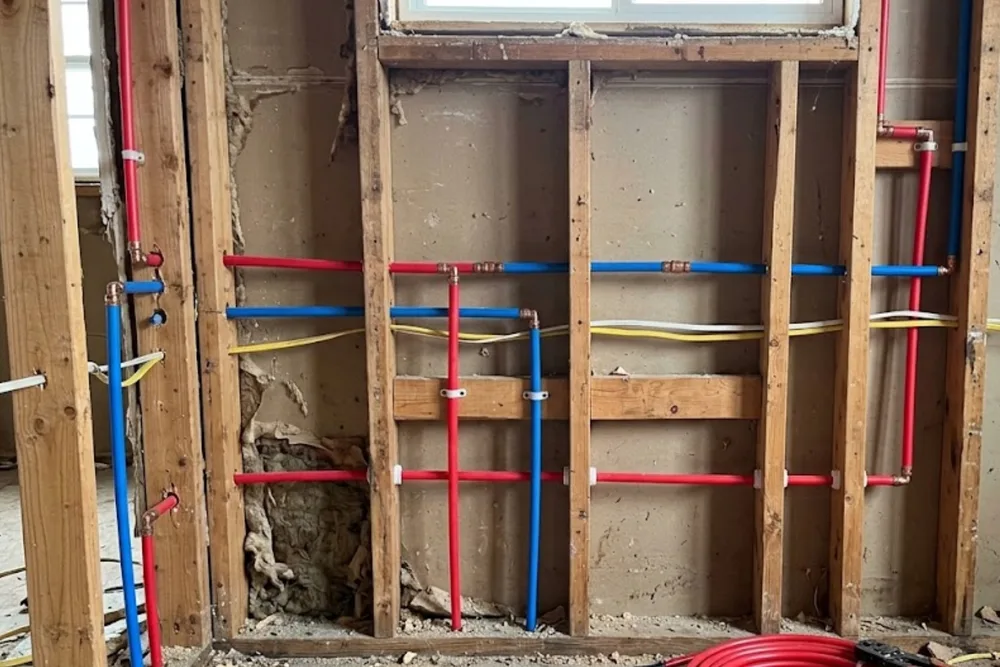
Why cast-iron and galvanized pipe fails on its own schedule
Cast-iron drain and supply pipe corrodes from the inside, where it can't be seen, over roughly 40 to 50 years. Galvanized supply pipe follows a similar pattern but often fails sooner, closer to 30 to 50 years, as the zinc coating wears through and the steel underneath starts rusting from the inside out.
Pompano Beach's mid-century housing stock puts a meaningful share of homes right in that window now. The pipe doesn't announce itself failing. Water pressure drops gradually, the water bill creeps up with no visible leak, or rust-tinted water shows up at one fixture before others, and by the time there's a visible leak the pipe has usually been failing for a while already.
What a repiping actually involves
For a whole-home repipe, PEX is the more common choice now because it doesn't corrode and handles small ground shifts better than rigid copper, though copper is still the right call in some situations, particularly exposed runs. Either way, the job means opening a limited number of access points in walls or the slab, running new lines, and patching, not tearing out entire walls.
A partial repipe, limited to the sections showing the worst corrosion, is sometimes the more honest answer than a full whole-home job, especially if half the house was already updated at some point. We inspect and tell you which situation applies rather than defaulting to the bigger job.
| Material | Typical Lifespan | Corrodes? | Common In |
|---|---|---|---|
| Cast iron / galvanized (original) | 40-50 years | Yes, from inside out | Pre-1980 homes here |
| Copper | 50+ years | Rarely | Exposed runs, some repipes |
| PEX | 40-50+ years | No | Most repipes today |
How long a repipe takes and what happens to water service
A whole-home repipe on an average single-family home typically runs one to three days depending on the home's size and how the original lines were run. Water gets shut off during active work but is restored each evening, so it's rarely a multi-day stretch with no water at all.
Drywall access points get patched as part of the job, though texture-matching and paint are usually left for the homeowner's own painter, since matching an exact existing texture and color isn't something a plumbing crew is equipped to do well. We'll be upfront about where our work ends on that front before starting.
What happens to fixtures and finished walls during the job
Faucets, toilets, and other fixtures usually get disconnected and reset rather than replaced, since the fixtures themselves aren't what's failing in a repipe. If a fixture is already old enough that reconnecting it risks a leak on its own, we'll flag that separately rather than assume it should be swapped as part of the repiping cost.
For homes with tile, terrazzo, or another finished slab floor, we discuss the access-point plan before cutting anything, since terrazzo in particular is harder to patch invisibly than standard concrete or drywall. Knowing that going in avoids a surprise about floor patching after the fact.
What to do before you call about repiping
A few signs are worth checking for directly: rust-tinted water at more than one fixture, a noticeable and sustained drop in water pressure across the house rather than at just one tap, or a second pipe leak within a year of the first. Any one of these on a pre-1980 home is worth a call rather than waiting for a third repair.
If a leak is actively visible, shut off the main water valve before calling to limit damage while a repiping conversation gets sorted out.
What Actually Affects Cost
- Whole-home vs partial repipe scope
- Number of access points needed through walls or slab
- Pipe material chosen (PEX vs copper)
- Drywall or flooring patching after access points close
- Home size and number of fixtures served
Most homeowner insurance policies cover a sudden, accidental plumbing failure, a burst pipe, for example, but not gradual wear or a line that failed from ordinary age-related corrosion. That's the honest baseline to plan around rather than assume coverage applies.
Want your real number for this job? Call (954) 697-4920.
Related Services in Pompano Beach
Repiping decisions usually start with leak detection, since finding exactly where and how badly a line has corroded determines whether a partial repipe is realistic or a whole-home job is the honest answer. If the failure has already caused water damage restoration is the separate service that handles the cleanup, not the pipe itself. Homes with the original 1960s and 70s plumbing are common enough here that it's worth asking about during any other service call too. A water heater installation & replacement often gets scheduled at the same time as a repipe, since both jobs already involve the same section of the house being opened up.
Repiping & Whole-Home Pipe Replacement Questions
How do I know if my home has cast-iron or galvanized pipe?
Homes built before roughly 1980 in this area are the most likely candidates. A technician can confirm the material during an inspection, often from the water heater connection or an exposed section in a utility area.
Does repiping mean tearing out walls?
No. Access points are limited and targeted, not a full wall demolition. Drywall patching is part of the job afterward.
Is PEX or copper better for a whole-home repipe?
PEX is the more common choice for full repipes now because it resists corrosion and handles minor shifting well. Copper still has a place for certain exposed runs. We'll tell you which fits the specific job.
Will water pressure improve after a repipe?
Often yes. Corrosion buildup inside old galvanized or cast-iron pipe restricts flow well before it actually leaks, and PEX or copper restores the pipe's full original diameter. Homeowners who've lived with gradually declining pressure for years are sometimes surprised by how much of a difference a full repipe makes.