
Emergency Leak Detection in Pompano Beach, FL | 24/7 Response
Slab leaks and hidden loss located without tearing up the whole floor, using the same tools that find a corroding cast-iron line before it becomes a break.
The signs a hidden leak leaves behind
A slab leak rarely shows up as standing water. More often it's a warm spot on the floor over a hot water line, a water bill that jumped with no new usage to explain it, or a faint sound of running water when every fixture in the house is off. Any one of these on its own is worth a look. Two or more together usually means something is actively leaking right now.
In Pompano Beach specifically, the age profile matters. A home built before 1980 with cast-iron pipe under the slab is the most likely candidate for this kind of leak, since that's exactly the pipe material and age range where internal corrosion tends to break through. Repairs on any of these lines are performed to the Florida Building Code, Plumbing, the statewide standard based on the International Plumbing Code.
How we find it without breaking up the floor first
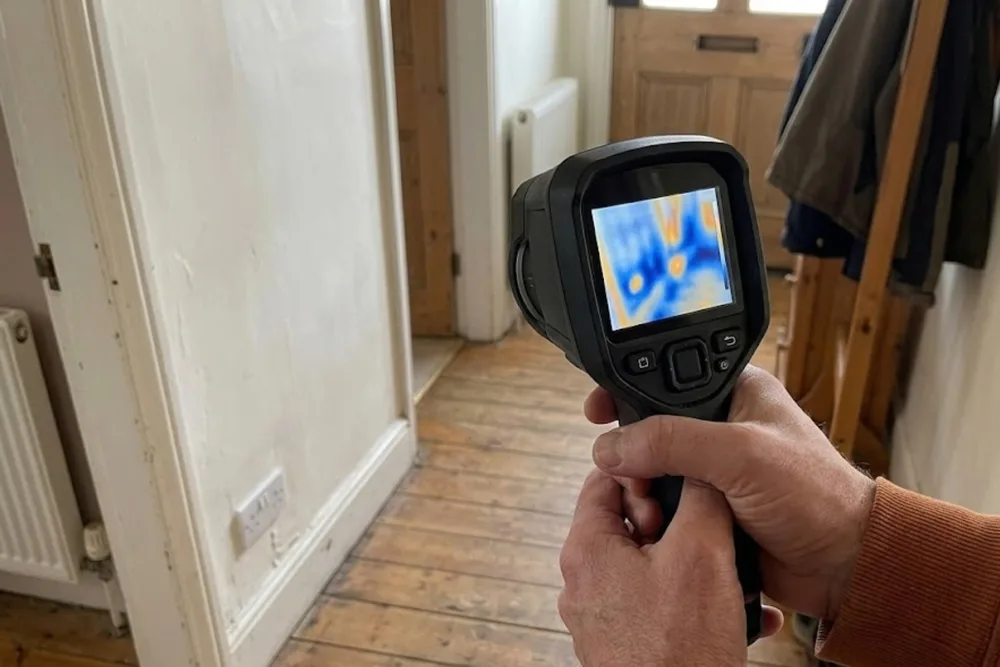
Acoustic listening equipment and thermal imaging locate the leak's approximate position from above the slab, which is what lets a repair open one targeted section of flooring instead of jackhammering a wide search area. Pressure testing on isolated sections of the line also helps narrow down which run is actually losing water when there's more than one candidate.
Once the leak is located, the next decision is whether to repair that one section of pipe or treat it as a sign the rest of the line needs the same attention. On a home with cast-iron pipe from the same era, a single leak is often the first of several, and we'll tell you honestly if that's the pattern we're seeing rather than just patching the one spot.
What happens after the leak is found
Once located, a single isolated leak on an otherwise sound line usually gets repaired directly, either by accessing that one section of slab or pipe, or by rerouting a short section above the slab to bypass the damaged run entirely, which is sometimes faster than breaking concrete.
If the leak turns out to be the first sign of broader corrosion along a cast-iron or galvanized line, patching that one spot is a short-term fix at best. We'll say so plainly, along with what a fuller repiping conversation would involve, rather than repairing the same pipe every year or two.
Leak detection during a home purchase or insurance inspection
A pre-purchase leak detection check makes sense specifically for homes built before 1980 in this area, since a buyer taking on a house with original cast-iron supply lines is effectively inheriting whatever corrosion has already happened, visible or not. Finding that out before closing changes the negotiation, not just the repair timeline.
Some insurance carriers also request a leak inspection report after a claim involving water damage, to document that the underlying cause was addressed rather than just the visible damage. We provide readings and findings in a form suitable for that kind of documentation when asked.
What to do before you call about a possible leak
A few checks take under a minute and help narrow things down before a technician arrives: note whether any floor area feels warm to bare feet, check if the water meter's leak indicator is spinning with every fixture in the house off, and look at the last two water bills side by side for an unexplained jump.
If water is visibly pooling anywhere, shut off the main water valve, usually near the water meter or where the line enters the house, before calling. That single step limits damage far more than anything done after the technician arrives.
What Actually Affects Cost
- Whether the leak is under slab, in a wall, or an exposed line
- How many sections of line need pressure testing to isolate the leak
- Equipment needed (acoustic listening vs thermal imaging vs both)
- Access difficulty (tile floor vs accessible crawlspace)
Most homeowner insurance policies cover a sudden, accidental plumbing failure, a burst pipe, for example, but not gradual wear or a line that failed from ordinary age-related corrosion. That's the honest baseline to plan around rather than assume coverage applies.
Want your real number for this job? Call (954) 697-4920.
Related Services in Pompano Beach
A confirmed slab leak on older cast-iron pipe often leads to a repiping and whole-home pipe replacement conversation rather than a one-time patch, especially if the home hasn't been touched since it was built. If the leak has already caused visible damage to flooring or drywall, water damage restoration is the separate line that handles cleanup and drying. And if the leak turns out to be a fixture rather than a slab issue, general plumbing repair covers that more directly.
Leak Detection Questions
How fast can someone get to my Pompano Beach address?
Dispatch runs 24/7 and the nearest available technician is sent as soon as you call. Exact arrival time depends on where you are in the coverage area, which we'll confirm on the call.
Will you have to break up my floor to find the leak?
Not to find it. Locating a slab leak uses acoustic and thermal equipment first. Repairing it does require opening one targeted section of flooring or wall, not the whole area.
My water bill went up but I don't see any water. Could it still be a leak?
Yes, that's actually one of the more common ways a slab leak first shows up, especially in older homes. It's worth a leak detection visit before assuming it's a billing error.
Can leak detection find a leak in the yard, not just under the house?
Yes, the same acoustic and pressure-testing methods work on the water line running between the meter and the house, not only on lines under the slab. A yard leak often shows up as a soft, unusually green patch of grass even in dry weather, which is worth mentioning when you call.