
What Causes Sewer Line Backups in Older Broward County Homes
A sewer backup rarely happens without warning. Here's what actually causes them in this area's older housing, and the signs that appear before a full backup.
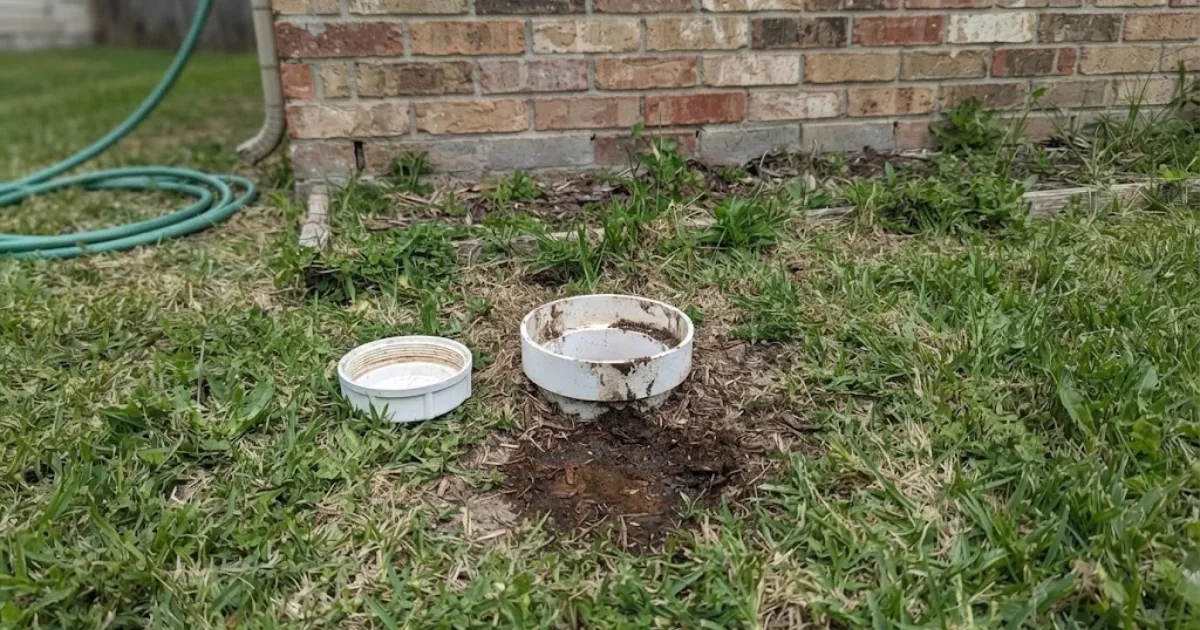
The two most common causes in this area's older homes
Tree root intrusion is the leading cause of sewer line backups in homes with mature landscaping, which describes a real share of properties in this part of Broward County given how long many neighborhoods have been established. Roots seek out the moisture inside a sewer line and enter through small cracks or joints, gradually growing large enough to block or even crack the pipe entirely.
Aging clay or cast-iron sewer pipe, common in homes built before the 1980s, is the other major factor, since these materials degrade internally over decades in ways that create the exact conditions, cracks, offset joints, uneven settling, that let root intrusion and blockages take hold in the first place.
Early warning signs before a full backup
Slow drainage across multiple fixtures at once, rather than just one sink or tub, is one of the clearest early signs, since it points at the main line rather than an isolated fixture issue. Gurgling sounds from drains when the washing machine or another high-volume fixture runs, a sewage smell in the yard along the line's path, and unusually green or soggy grass over that same stretch of lawn round out the list of signs worth acting on before they progress further.
Why a full backup is worse than it might seem
Once a line fully backs up, multiple fixtures can back up simultaneously, sometimes bringing sewage into the lowest drains in the house, a genuinely unpleasant and potentially costly situation. This is the point where what could have been a straightforward, planned repair becomes an emergency call, which is exactly why the early warning signs are worth taking seriously rather than waiting to see if they resolve on their own.
How the repair method gets determined
A camera inspection is the standard first step for nearly any sewer line issue, since it shows whether the damage is a crack or root intrusion suited to trenchless lining, a less invasive repair method, or a fully collapsed section that needs traditional excavation. The inspection footage also documents the pipe's overall condition, useful for understanding whether the issue is isolated or a sign the whole line is due for attention.
Reducing the odds of a repeat backup
Once a line has been repaired, avoiding flushing anything other than toilet paper, even products labeled flushable, keeping grease entirely out of kitchen drains, and having a known root intrusion issue jetted on a periodic schedule all meaningfully reduce how often the more serious version of this problem recurs.
A note on shared lines in multi-unit properties
In a duplex, townhome, or small multi-unit building, a sewer backup can sometimes originate from a line shared between units rather than being isolated to one property, which changes both the diagnosis and who's responsible for the fix. Mentioning the property type when scheduling a sewer line service call helps a technician arrive prepared to check this possibility rather than assuming a single-unit configuration.
How often a sewer line should be proactively inspected
For a home with mature trees near the sewer line or original clay or cast-iron pipe from before the 1980s, a camera inspection every three to five years, even with no active symptoms, catches root intrusion and early deterioration while they're still manageable. This is a modest, occasional cost compared to the disruption and expense of an actual backup, and it's a reasonable addition to a broader home maintenance routine for a property with this risk profile.
Related Reading
For the full process on how backups get diagnosed and fixed, sewer line repair and sewer camera inspection both cover the specifics. Oakland Park's older housing stock and mature landscaping make this an especially relevant topic for that city.
Sewer Backup Questions
Can tree root intrusion be prevented?
Not entirely on a property with mature trees near the line, but periodic camera checks and jetting at the first sign of intrusion catch it while it's still a manageable fix rather than a full backup.
Does a sewer backup always mean the whole line needs replacement?
No, often a specific section can be repaired, whether through trenchless lining or targeted excavation, without needing to replace the entire run.
Is a sewer backup covered by homeowners insurance?
It depends on the cause and the specific policy. Sudden, external causes are more likely to be covered than gradual deterioration from age, which many policies treat as a maintenance issue.
How urgent is a suspected sewer line problem?
Early signs like slow multi-fixture drainage are worth scheduling attention for soon. Multiple drains backing up at once is a genuine emergency worth same-day dispatch.
Can a sewer backup happen even with a recently repaired line?
It's uncommon but possible if a new root intrusion develops elsewhere on the line or if a separate section develops an unrelated issue, which is why periodic checks still have value after a repair.
Is it worth having a lawyer review a sewer line easement before repair?
For a repair confined to a homeowner's own property, this usually isn't necessary, though a line crossing into a shared easement or right-of-way occasionally benefits from that extra clarity.
Can a sewer camera find a collapsed section from just one access point?
Often yes, since the camera can be pushed through much of the line's length from a single entry point, though a very long or complex line occasionally needs a second access point.
Does homeowner DIY snaking ever cause sewer line damage?
Occasionally, if a consumer-grade snake is pushed too forcefully into an already-compromised pipe, which is one reason professional equipment and diagnosis are worth it for anything beyond a simple clog.