
Garbage Disposal Won't Turn On? Try This Before Calling
A disposal that's completely silent isn't always actually broken. Here's the troubleshooting sequence worth trying in order before assuming the whole unit needs replacement.
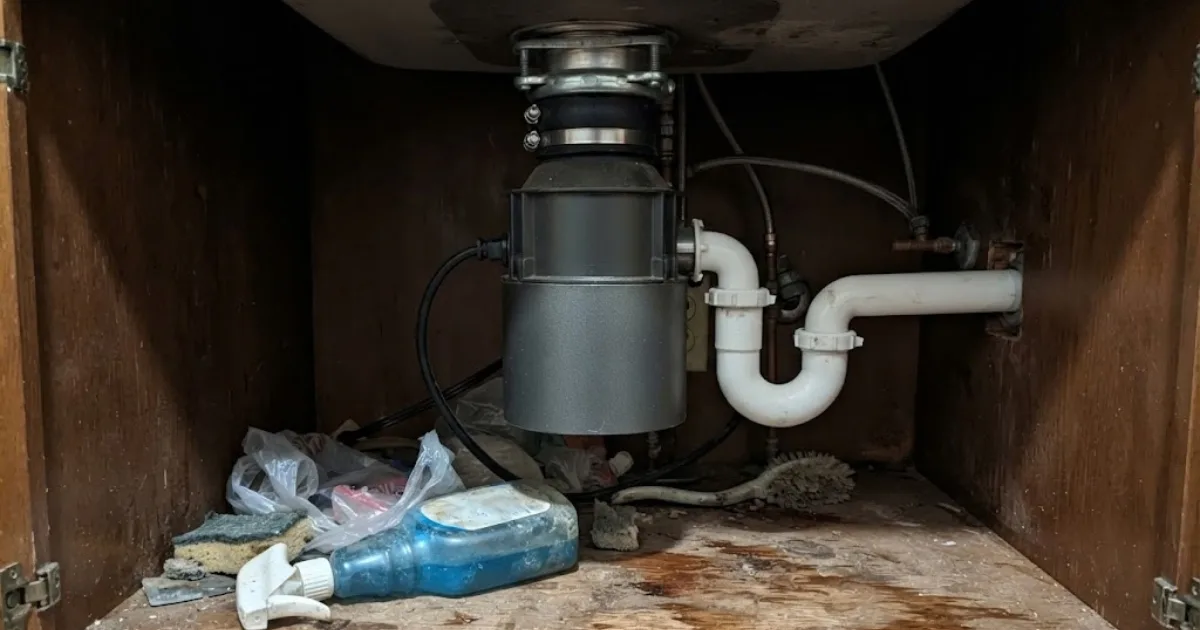
What to do before touching the disposal at all
Always switch off power at the breaker, not just the wall switch, before reaching near the blades or using the hex key, since a wall switch alone doesn't guarantee the unit is fully de-energized. Never use bare hands to clear debris even with power confirmed off. Use tongs or pliers instead.
Start with the reset button
Nearly every garbage disposal has a small red or black reset button on the bottom of the unit, underneath the sink. If the disposal has overheated or jammed, this button trips automatically to protect the motor. Press it firmly. If it clicks and stays in, that was likely the issue, and the disposal should work normally once switched back on.
If it hums but doesn't spin
A humming sound without the blades actually turning almost always means the flywheel is jammed by something solid caught inside. Turn off power at the breaker first, then use the hex key that came with most units, inserted into the bottom center hole, to manually rotate the flywheel back and forth until it turns freely. This frees most jams without needing any tools beyond that hex key.
If it's completely silent, no hum at all
Check that the unit is actually receiving power. A disposal is often plugged into an outlet under the sink, and that outlet may be on a switch or GFCI circuit that's tripped. Check the breaker panel too, since a disposal-specific breaker can trip without affecting other outlets in the kitchen. If power is confirmed and the unit still shows no response at all, not even a hum, that typically points to a failed motor or internal electrical component rather than something fixable with the reset button or hex key.
When it's time to call rather than keep troubleshooting
If the reset button doesn't hold, the flywheel spins freely but the unit still doesn't respond, or there's a burning smell at any point, stop troubleshooting and call for service rather than risk further damage or a safety issue. A disposal that's completely unresponsive after confirming power is usually a replacement rather than a repair, especially on an older unit.
Preventing the next jam
Avoiding fibrous vegetable scraps, large quantities of coffee grounds, grease, and hard items like bones or fruit pits going down the disposal meaningfully reduces how often a jam happens in the first place. None of these habits guarantee a disposal never jams again, but they make a real, noticeable difference over the unit's lifespan.
How to extend a disposal's working life
Running cold water, not hot, while the disposal operates helps solidify grease so it gets chopped and flushed rather than coating the blades and drain line. Running the disposal for a few extra seconds after grinding stops, with water still flowing, clears remaining debris rather than leaving it to sit in the unit until the next use.
When a disposal upgrade makes sense even without a failure
A disposal that technically still works but struggles with anything beyond soft food scraps, requires frequent manual clearing, or has become noticeably louder over time is a reasonable candidate for proactive replacement rather than waiting for a full failure. Upgrading to a higher horsepower unit during a kitchen renovation or remodel, even if the existing disposal isn't broken, is a common and sensible bundling of work.
Related Reading
For a full breakdown of repair versus replacement decisions, garbage disposal repair & installation covers both sides in detail. If the disposal issue is connected to a slow drain elsewhere in the kitchen, drain cleaning & unclogging addresses that separately. Coverage includes Pompano Beach and the surrounding cities on the service area page.
Garbage Disposal Troubleshooting Questions
Is it safe to reach into a disposal to clear a jam?
No, always switch off power at the breaker first and never reach in with the unit plugged in. Clearing a jam from above with the hex key doesn't require reaching inside at all.
How long do garbage disposals typically last?
Around 8 to 12 years with normal use, though usage habits, what actually goes down the drain, affect that lifespan meaningfully in either direction.
Can a tripped breaker be the only issue?
Yes, and it's worth checking before assuming a mechanical problem. A tripped disposal-specific breaker with everything else in the kitchen working normally is a common, simple explanation.
Should I try the reset button more than once?
A second attempt is reasonable, but if it trips again immediately after resetting, that points to a persistent jam or an internal issue rather than a one-time overload worth resetting repeatedly.
Can a disposal be too old to repair even if parts exist?
Sometimes, if the unit's overall condition, motor wear, internal corrosion, means a repair would only be a short-term fix, replacement is often the more sensible choice regardless of part availability.
Is a disposal replacement a good DIY project?
For someone comfortable with basic plumbing and electrical connections, yes, though matching the mounting assembly to the existing sink setup is the detail most likely to cause trouble.
Do all disposals fit any kitchen sink?
Most standard sinks accommodate most disposal models, though sink flange size and available under-sink space can occasionally require a specific model rather than any disposal off the shelf.
Can a garbage disposal leak cause damage even if it still runs?
Yes, a leaking disposal, even one that still operates normally, can cause real cabinet and subfloor damage over time and shouldn't be ignored just because it still functions.
Is a specific brand of disposal more reliable than others?
Reliability varies more by horsepower and build quality tier within a brand's lineup than by brand name alone, which is why we recommend based on the specific model and household needs.
Can I test a disposal's motor without turning it fully on?
The hex key manual rotation test checks for physical jams without engaging the motor, which is the safest way to check before attempting to power the unit back on.