
Cast-Iron vs PEX: What Pompano Beach Homeowners Should Know
If a home in this area was built before 1980, there's a real chance it still has its original cast-iron or galvanized pipe. Here's what that actually means, and what replacing it with PEX involves.
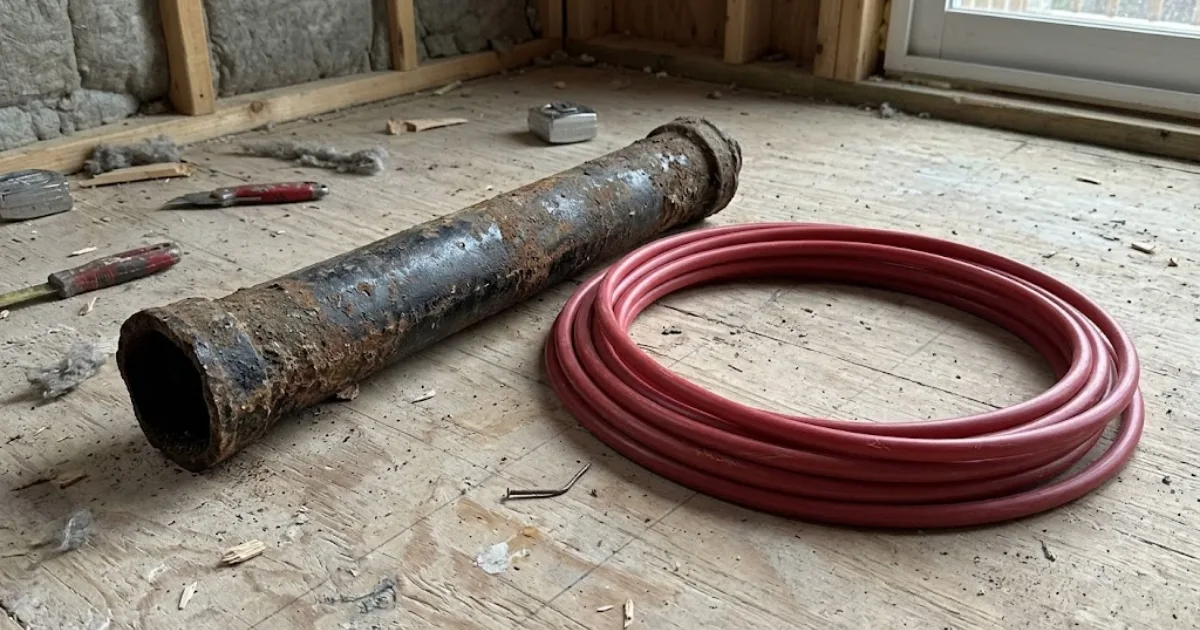
What to do before starting any pipe inspection yourself
Shut off the main water valve before opening any access panel or attempting to view exposed pipe near a water heater or utility area, even for a quick visual check. This avoids an accidental disturbance to an already-corroded fitting causing an unexpected leak while looking.
Why this comparison matters specifically here
Cast-iron and galvanized steel were the standard supply and drain pipe materials through the 1950s, 60s, and into the 70s, exactly the era when much of Pompano Beach and its neighboring coastal cities were built out. A meaningful share of homes in this area still have some or all of that original pipe, simply because it was never a mandatory replacement, only ever a repair-as-needed situation until now.
How cast-iron and galvanized pipe actually fail
Both materials corrode from the inside, where it can't be seen or inspected without specialized equipment. Cast-iron drain pipe typically lasts 40 to 50 years before internal corrosion becomes a real problem. Galvanized supply pipe often fails a bit sooner, in the 30 to 50 year range, as the zinc coating wears through and the steel underneath starts rusting.
The failure doesn't announce itself gradually in an obvious way. Water pressure drops slowly, or a water bill climbs with no visible leak, long before anything looks visibly wrong from outside the pipe.
Why PEX is the standard replacement now
PEX, a flexible plastic tubing, doesn't corrode the way metal pipe does, and it handles minor ground shifting better than rigid copper or the original cast-iron and galvanized lines. It's also faster to install in a repiping job, since it can be run through smaller access points than rigid pipe requires, which keeps the amount of wall or slab opening needed to a minimum.
Copper still has a place in some situations, particularly exposed runs where its rigidity and appearance matter, but for a full repipe, PEX is now the more common choice across this network's coverage area.
How to know which material a specific home actually has
The build year is the first clue: anything before 1980 in this area is a real candidate for cast-iron or galvanized pipe. A technician can confirm the actual material during an inspection, often visible at an exposed section near the water heater or in a utility area, without needing to open walls just to check.
What a repiping job actually involves
A whole-home repipe means opening a limited number of targeted access points, not tearing out entire walls, running new PEX lines through those points, and patching afterward. Most residential jobs finish in one to three days, with water restored each evening rather than being off for the full duration.
What a partial repipe looks like in practice
Not every home with some cast-iron or galvanized pipe needs a full whole-home repipe immediately. If a previous owner already replaced sections, say the kitchen and one bathroom during a past renovation, while the rest of the home retains original pipe, a partial repipe addressing just the remaining original sections is sometimes the more honest and cost-effective answer than redoing work that's already been done.
The key is an honest assessment of what's actually still original versus what's already been updated, which is why an inspection before any repiping quote matters more than assuming based on the home's overall age alone.
How repiping affects a home's resale value
A documented recent repipe is a genuine selling point for a home in this area, since buyers and their inspectors are increasingly aware of the cast-iron and galvanized pipe issue common to homes of this age. Conversely, original 1960s or 70s plumbing discovered during a pre-purchase inspection can become a negotiating point that costs a seller more in a reduced offer than a planned repiping would have cost outright.
Related Reading
For the full picture on when a partial repipe makes sense versus a whole-home job, repiping & whole-home pipe replacement covers the decision in more detail, and leak detection is usually the first step in figuring out how far the corrosion has actually progressed. Oakland Park, with some of the oldest housing stock in this coverage area, is a useful reference point for this exact issue.
Cast-Iron vs PEX Questions
Is galvanized pipe dangerous to drink water from?
Old galvanized pipe can leach lead and other materials as it corrodes internally, which is a real health consideration separate from the leak risk, and one more reason replacement is worth prioritizing on an older home.
Can PEX be used everywhere cast-iron currently runs?
For supply lines, yes. For drain lines specifically, PVC is the modern standard replacement rather than PEX, which is a supply-line material.
Does a full repipe require tearing out walls?
No. Access points are targeted and limited, with drywall patching afterward, not full demolition of affected rooms.
How do I know if my specific home needs this?
A build year before 1980 in this area is the first signal. A technician can confirm the actual pipe material and its condition during an inspection.
Does copper pipe have the same corrosion issues as galvanized?
No, copper is far more corrosion-resistant than galvanized steel, which is part of why it became the preferred replacement material before PEX became the newer standard.
Can I mix PEX and copper in the same repiping job?
Yes, this is common when certain exposed runs are better suited to copper while the majority of the home uses PEX, and a technician can advise on the right combination.
How long does a technician need to confirm pipe material?
Usually just a few minutes during any other service visit, checking an exposed section near the water heater or a utility area without needing to open walls.
Does a home inspection during a sale typically identify pipe material?
A general home inspector may note visible pipe material, but a full material assessment usually requires the more specific expertise a plumber provides during a dedicated inspection.